Maximizing Your Kitchen With Kitchen Tall Units
The Ultimate Storage Hack
When it comes to kitchen renovations, we often focus on the "golden triangle" of the stove, sink, and fridge. But if you really want to transform your space, you need to look up. Tall kitchen units—also known as tower units or full-height cabinets—are the unsung heroes of modern design, offering a seamless blend of massive storage capacity and sleek aesthetics.
Whether you’re working with a compact city apartment or a sprawling open-plan home, here is how to master tall unit design.
Why Go Tall? The Benefits of Vertical Thinking
Tall units typically stand between 2,100mm and 2,400mm high, stretching nearly or entirely to the ceiling.
Space Efficiency: They utilize the often-wasted "airspace" above standard counters, perfect for small kitchens where every centimeter counts.
Reduced Visual Clutter: By housing bulky appliances and pantry staples behind closed doors, you keep your countertops clear and your kitchen looking "Instagram-ready".
The Illusion of Height: Their long vertical lines draw the eye upward, making low-ceiling rooms feel significantly taller and more spacious.
The Rise of the Tower: Top Tall Unit Designs for 2025-2026
In modern kitchen design, the "tall unit" has evolved from a simple pantry into the architectural backbone of the home. Often referred to as tower units, these floor-to-ceiling powerhouses are the secret to a kitchen that looks expensive, stays organized, and maximizes every square inch of vertical space. If you’re planning a renovation, here are the top tall unit designs currently dominating the interior world.
The "Invisible" Integrated Wall
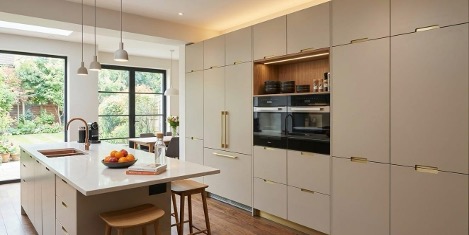
The biggest trend for 2026 is the seamless bank. Instead of seeing individual cabinets, designers are creating a solid wall of cabinetry that looks like a decorative timber or matte panel.
The Look: Handleless doors with "push-to-open" technology or recessed finger pulls.
The Benefit: It hides bulky appliances like the fridge and freezer behind matching furniture panels, making the kitchen feel more like a living room extension.
Pro Tip: Use dark walnut or smoked oak finishes to achieve that "quiet luxury" aesthetic.
The Space Tower Pantry
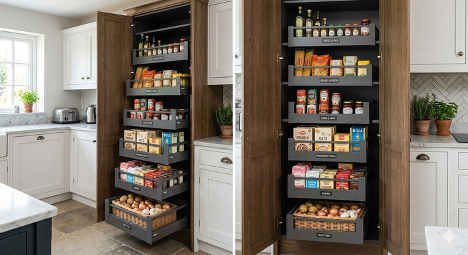
Gone are the days of losing a jar of spices at the back of a deep shelf. The modern tall unit is all about ergonomic internal systems.
The Design: Instead of static shelves, the unit is fitted with 4 to 5 individual full-extension drawers.
Why it Works: Each drawer can hold up to 30kg–50kg, and because they pull out individually, you have a clear view of everything from above. This is the gold standard for high-capacity food storage.
The Pocket-Door Breakfast Station
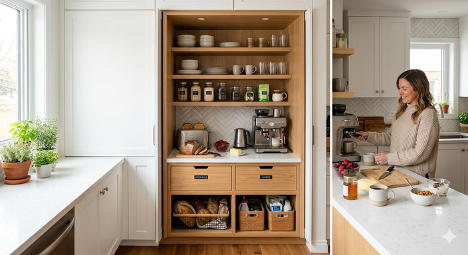
This is the ultimate "now you see it, now you don't" design.
The Design: A double-width tall unit with doors that fold and slide back into "pockets" on the sides.
The Function: Inside, you’ll find a stone countertop, power outlets, and shelving for your coffee machine, toaster, and blender.
The Benefit: You can leave it open during a busy morning and simply slide the doors shut when guests arrive to instantly hide the mess.
The Mid-Height Appliance Stack
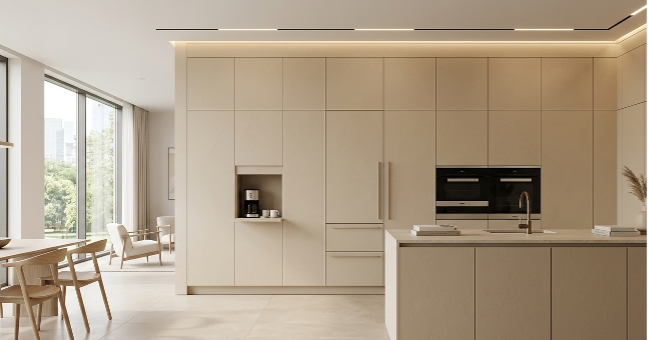
Tall units aren't just for storage; they are the best place for your "hot zone."
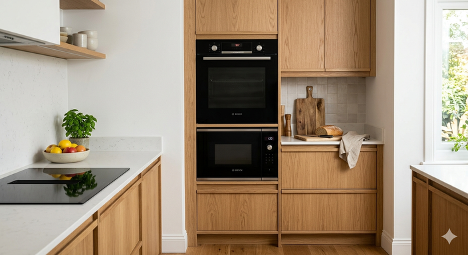
The Layout: Stacking a traditional oven and a steam oven (or microwave) at eye level.
The Ergonomics: Placing the main oven roughly 900mm to 1050mm from the floor means no more bending down to check on a roast.
Visual Balance: Framing the ovens with tall larder units on either side creates a symmetrical, high-end look.
The Glass-Fronted Display Tower
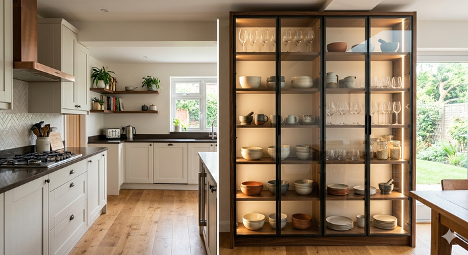
To prevent a long run of tall units from feeling too heavy or "boxy," designers are incorporating fluted glass sections.
The Detail: Use black-framed aluminum doors with ribbed or frosted glass.
The Vibe: Add internal LED vertical strip lighting. It transforms a storage unit into a glowing display for glassware and ceramics, adding depth and "mood lighting" to the kitchen at night.
When installing tall units, always aim for full-height (ceiling-touching) designs to eliminate the "dust gap" at the top and create a cleaner, more architectural finish.